
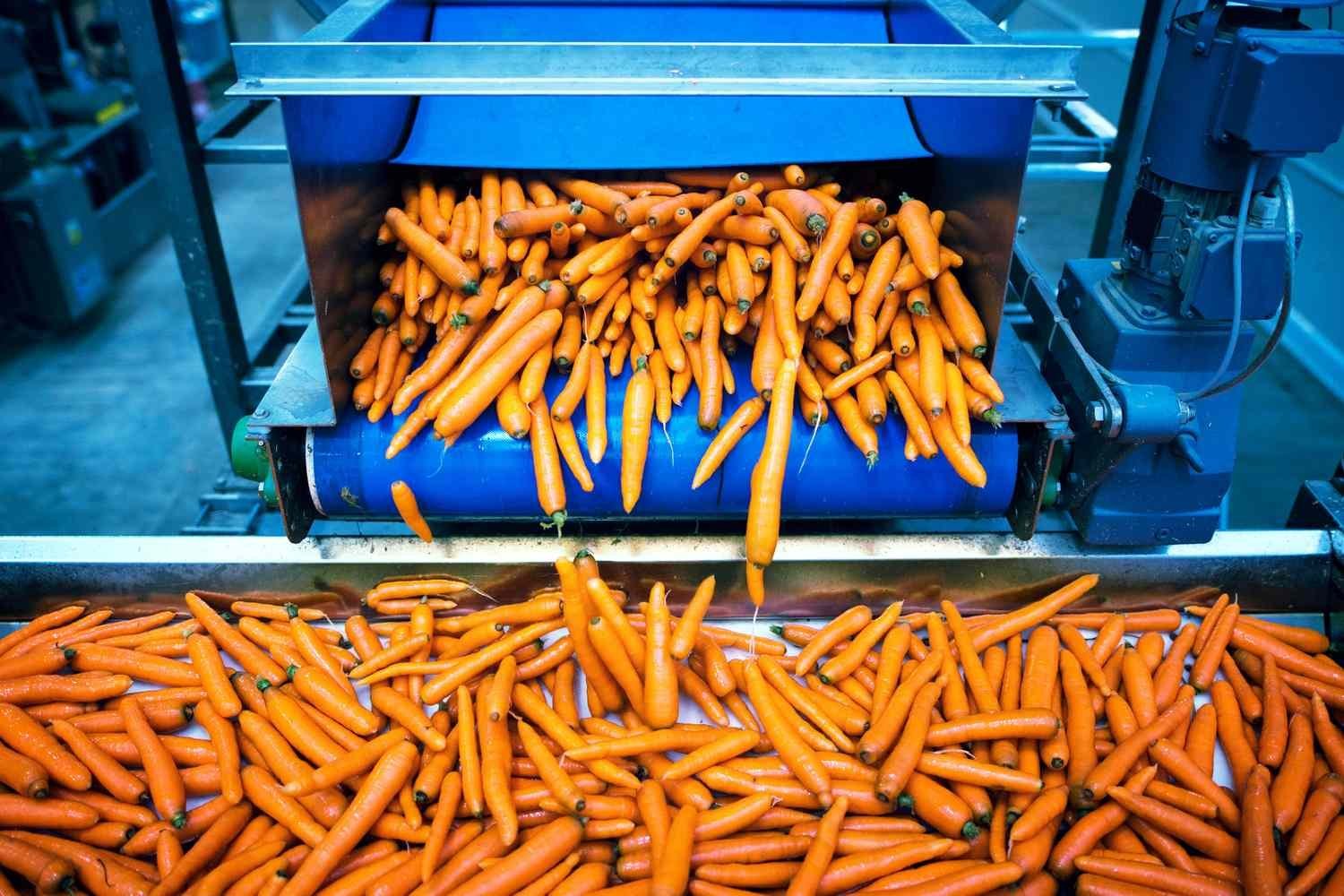
- U.S. researchers have found a way to transform carrot waste into a sustainable protein source by feeding carrot scraps to edible fungi.
- Pink oyster mushrooms showed the most promise, producing high-protein yields comparable to those of animal and plant sources while remaining low in fat and rich in fiber.
- In taste tests, volunteers preferred vegan patties made entirely from fungal mycelium to those made with soy, pointing to a flavorful, eco-friendly new alternative protein.
We’ve shared this stat before, but it bears repeating: The U.S. wastes 30 to 40% of its food supply each year. As the U.S. Department of Agriculture explains, that worked out to about 133 billion pounds of food and $161 billion worth of food in 2010, which, accounting for inflation, would be about $239.3 billion today. While that waste happens along almost every stage of food production, there are some very smart people working on ways to reduce this number, some of whom just figured out how to make carrot waste taste delicious.
In December, researchers published the findings of their work in theJournal of Agricultural and Food Chemistryexploring if they could turn waste from carrot processing into a sustainable source of protein.
Specifically, the researchers explained that they fed carrot scraps to edible fungi, thus creating a sustainable protein source that could be used in things like veggie burgers and veggie sausages.
A lot of trial and error went into the process of creating these patties and sausages, with the team noting they tested 106 different fungal strains. These were grown on the “side streams” from orange and black carrots, which simply means they were grown on the typically wasted parts of the carrot like its greens and peels. The researchers evaluated how well each strain grew, with one particular strain standing out from the pack: the pink oyster mushroom.
Next, the team refined their growing conditions to increase the protein yield, noting they were able to get to “comparable” levels of those found in both animal and plant protein. And, as a bonus, they noted that pink oyster mushrooms are low in fat and contain fiber levels “similar to other edible fungi.”
Courtesy of Leonie Cora Juhrich, Iris Lammersdorf, Pascal Schmitt, Lars Tasto, Falk Speer, Denise Salzig, Kai Reineke, Holger Zorn, and Martin Gand / Journal of Agricultural and Food Chemistry / DOI: 10.1021/acs.jafc.5c11223 / CC-BY 4.0
Then came the most important part of the experiment: the taste test. The researchers recruited volunteers to sample the foods made from these scrappy fungi, such as vegan patties that replaced soy protein with varying amounts of mycelia, including 0%, 25%, 50%, 75%, or 100% fungal protein. The researchers found that participants preferred the patties made entirely with mycelium over those made entirely with soy.
As Martin Gand, the corresponding author of the study, shared in a statement“This study is a significant step towards a circular economy by transforming valuable food side streams into a high-quality protein source, highlighting the potential of fungal mycelium in addressing global food security and sustainability challenges.” Now all they’ve got to do is bring it to market.
Disclaimer: This news article has been republished exactly as it appeared on its original source, without any modification.
We do not take any responsibility for its content, which remains solely the responsibility of the original publisher.
Disclaimer: This news article has been republished exactly as it appeared on its original source, without any modification.
We do not take any responsibility for its content, which remains solely the responsibility of the original publisher.
Author: uaetodaynews
Published on: 2026-01-12 11:39:00
Source: uaetodaynews.com