

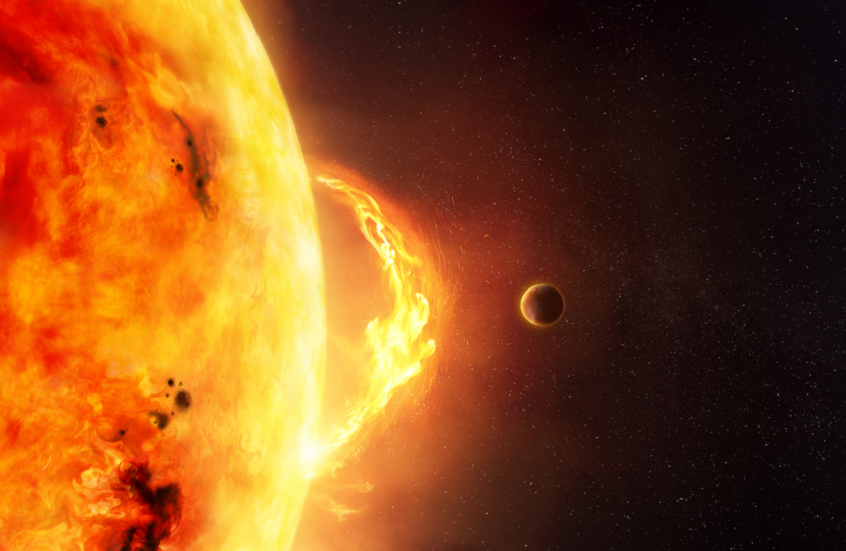
The Astronomy Laboratory of the Russian Academy of Sciences indicated that the second flare, class M3.4, is the strongest flare that has been observed since the beginning of this year, and it occurred on the far side of the sun, behind the solar horizon line, and some of the radiation resulting from it reached the upper layers of the sun’s atmosphere.
Solar flares are divided into five categories according to the intensity of the X-rays they emit: A, B, C, M, and
These flares lead to magnetic storms that may cause disruption in energy systems, affect the migration paths of birds and animals, and may also affect the operation of communications and navigation systems on Earth.
Source: TASS
Disclaimer: This news article has been republished exactly as it appeared on its original source, without any modification.
We do not take any responsibility for its content, which remains solely the responsibility of the original publisher.
Author:
Published on:2026-01-12 13:32:00
Source: arabic.rt.com
Disclaimer: This news article has been republished exactly as it appeared on its original source, without any modification. We do not take any responsibility for its content, which remains solely the responsibility of the original publisher.
Author: uaetodaynews
Published on: 2026-01-12 09:37:00
Source: uaetodaynews.com